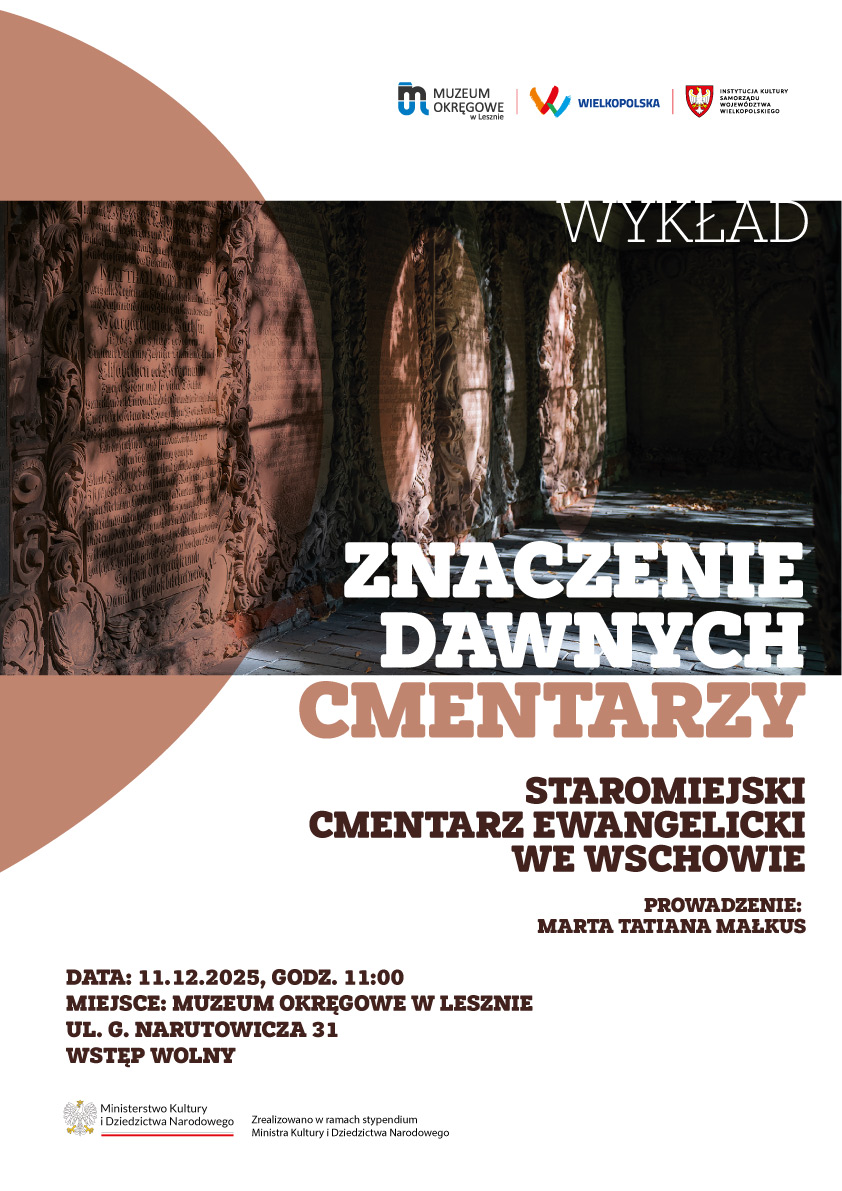
Wykład
The importance of former cemeteries. Old Town Evangelical Cemetery in Wschowa
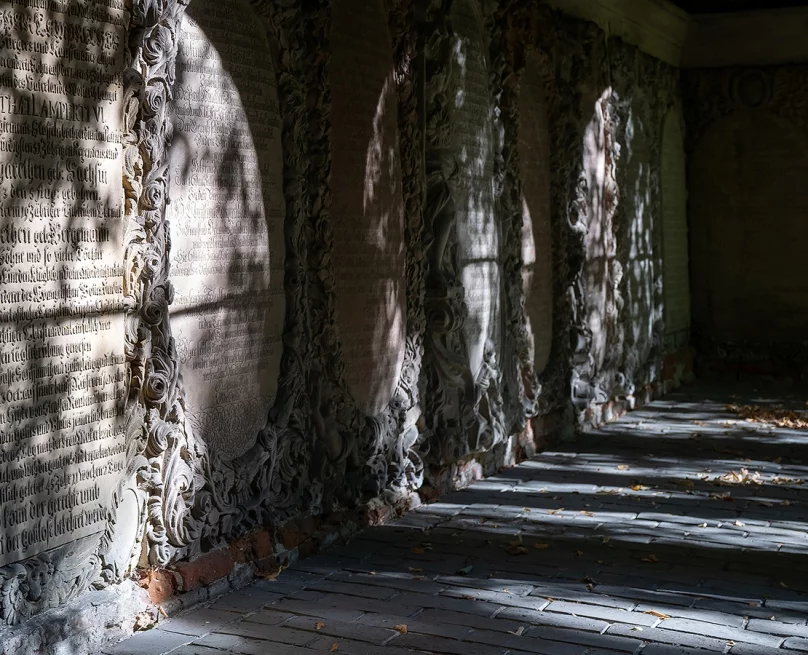
We invite you to a lecture on the history and importance of former cemeteries, with particular emphasis on the Lutheran cemetery in Wschowa. During the meeting, participants will learn about the rich symbolism of tombstones, Baroque inscriptions and the history of the town's former inhabitants. It is a story about the stone chronicle of Wschowa, about art, culture and the life of past generations.
We invite you to the District Museum in Leszno, on December 11, at 11.00 a.m. Admission free. The meeting, which takes place as part of the project "Ut vivas disce mori – what do cemeteries teach us?", will be hosted by Marta Małkus, an art historian. The lecture is carried out as part of a scholarship of the Minister of Culture and National Heritage.
We invite you to the District Museum in Leszno, on December 11, at 11.00 a.m. Admission free. The meeting, which takes place as part of the project "Ut vivas disce mori – what do cemeteries teach us?", will be hosted by Marta Małkus, an art historian. The lecture is carried out as part of a scholarship of the Minister of Culture and National Heritage.
Lecturer: Marta Tatiana Małkus
An art historian and museologist, she has been researching the history and art of the Wschowa region for years. She curated exhibitions on the history of Wschowa and the art of Central Europe in the 16th–18th centuries. She was awarded the Gloria Artis bronze medal for her activities for the benefit of cultural heritage.
About the project:
The project "Ut vivas disce mori – what do cemeteries teach us?" focuses on the oldest modern cemetery in Poland – the Lutheran necropolis in Wschowa, founded in 1609. The aim is to develop materials for a monograph of the monument and to popularize the cemetery as a place of harmony between culture and nature, showing the history of people and the art of dying (ars morendi). The project includes lectures, educational walks and a guide.