Śmigus-dyngus and sculpture from the Museum's collection
The author of the text is Ewa Tomaszewska
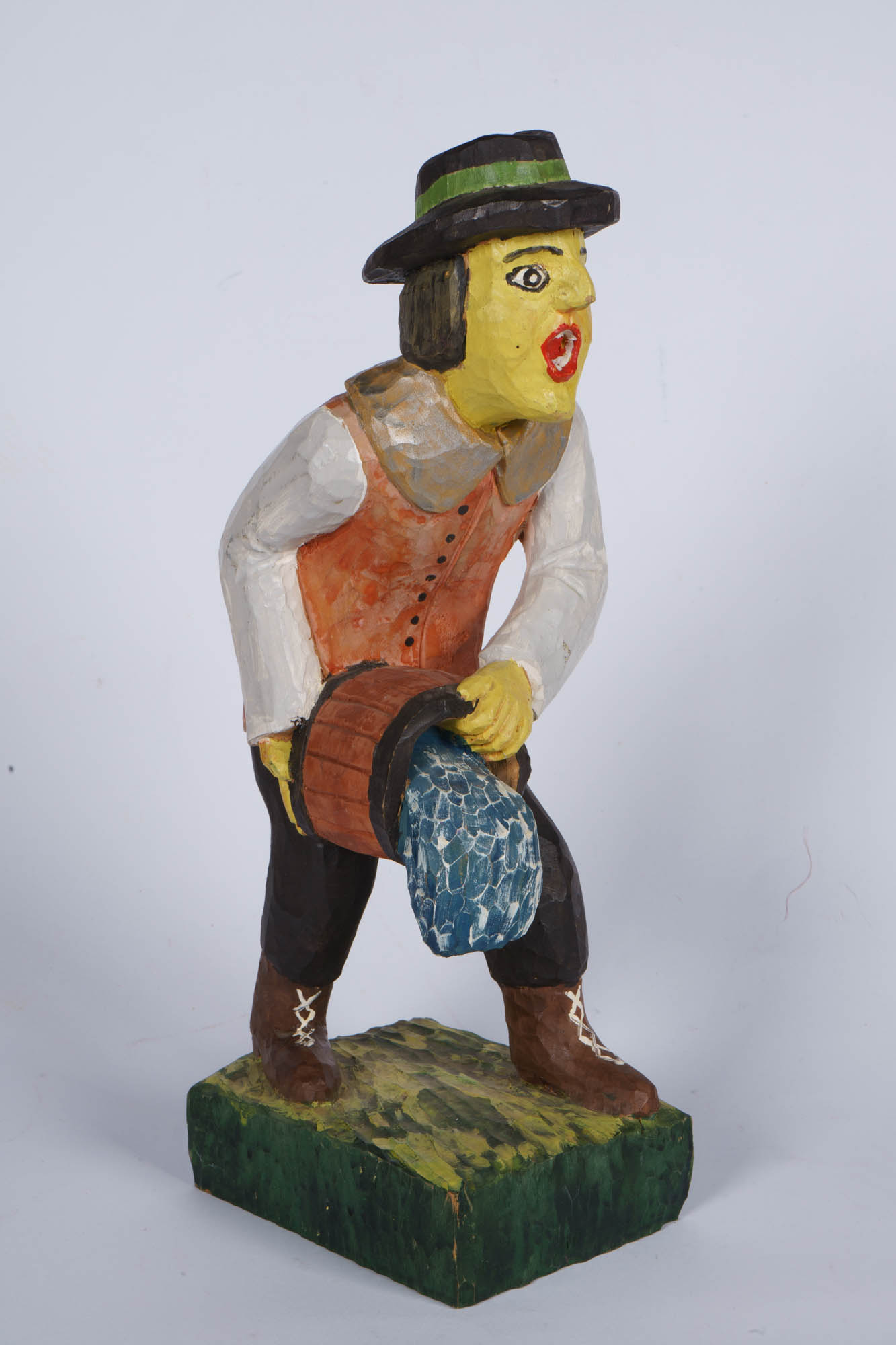
The sculpture depicts a man in traditional clothing holding a vessel of water. His pose is full of dynamics, as he is shown at the moment of swinging around to splash water. The sculpture by the folk artist Jerzy Sowijak from Bukowiec Górny is part of the trend of non-professional art. It depicts the custom of pouring water on Easter.
Traditionally, Easter Monday was filled with customs that had their own characteristic course. In many areas, from the morning, one could hear the screams of girls poured by farmhands, dragged out of beds, led to wells or nearby waters, poured with convies, węborki and buckets. It was believed that abundant wetting would ensure health and prosperity, so it was a reason for satisfaction. In the house of the drenched girl, cows were to give more milk, and this bode well for her to get married quickly. For the maidens who were not watered, it was a great shame. Girls could return the favor by pouring water on the boys the next day or giving them painted eggs. On that day, boys walked around the dyngus singing songs and receiving refreshments as a kind of payment for pouring water on the girls. The collected gifts were eaten together during the evening feast. Here and there people walked in disguises, including with a bear, a boy wrapped in straw. The costumed people went from house to house, giving a show and collecting gifts. An old dyngus song began with the words: "We came here for dyngus, we will sing about Jesus...". Pouring a lot of water could also once have had the magical function of provoking nature to cause abundant rains, which in the spring months were necessary for good crop growth and a successful harvest.
The custom of Easter pouring is associated with the symbolism of water and the meanings attributed to it in traditional culture. The element existing in the primeval beginnings of the world carried the potential of life-giving and fertilizing, creative and destructive power at the same time. Water was associated with renewal, fertility, spring rebirth of nature, vegetation and achieving fertility. Its cleansing and vitalizing properties were believed in.
The sculpture depicts a man in traditional clothing holding a vessel of water. His pose is full of dynamics, as he is shown at the moment of swinging around to splash water. The sculpture by the folk artist Jerzy Sowijak from Bukowiec Górny is part of the trend of non-professional art. It depicts the custom of pouring water on Easter.
Traditionally, Easter Monday was filled with customs that had their own characteristic course. In many areas, from the morning, one could hear the screams of girls poured by farmhands, dragged out of beds, led to wells or nearby waters, poured with convies, węborki and buckets. It was believed that abundant wetting would ensure health and prosperity, so it was a reason for satisfaction. In the house of the drenched girl, cows were to give more milk, and this bode well for her to get married quickly. For the maidens who were not watered, it was a great shame. Girls could return the favor by pouring water on the boys the next day or giving them painted eggs. On that day, boys walked around the dyngus singing songs and receiving refreshments as a kind of payment for pouring water on the girls. The collected gifts were eaten together during the evening feast. Here and there people walked in disguises, including with a bear, a boy wrapped in straw. The costumed people went from house to house, giving a show and collecting gifts. An old dyngus song began with the words: "We came here for dyngus, we will sing about Jesus...". Pouring a lot of water could also once have had the magical function of provoking nature to cause abundant rains, which in the spring months were necessary for good crop growth and a successful harvest.
The custom of Easter pouring is associated with the symbolism of water and the meanings attributed to it in traditional culture. The element existing in the primeval beginnings of the world carried the potential of life-giving and fertilizing, creative and destructive power at the same time. Water was associated with renewal, fertility, spring rebirth of nature, vegetation and achieving fertility. Its cleansing and vitalizing properties were believed in.
Jerzy Sowijak, Śmigus dyngus, Bukówiec Górny, 1996, linden wood, sculpture, polychrome, height 35 cm, width 10.5 cm, 13.5 cm, District Museum in Leszno, inv. no. MLE 2023